GROQ RAISING $650M AFTER $20B NVIDIA DEAL, PIVOTS TO AI INFERENCE CLOUD
Groq — the AI chip startup that shook the tech world with the fastest inference chips on the market — is raising $650 million from existing investors to expand its inference cloud business, following a $20 billion deal with Nvidia last December.
The news was exclusively reported by Axios and confirmed by TechCrunch. Accordingly, the agreement with Nvidia was not a full acquisition — though if it had been, it would have been the largest deal in the "green chip giant's" history. Instead, Nvidia paid $20 billion to license Groq's hardware technology, along with the transfer of several senior executives. Groq's investors received cash payouts from the transaction.
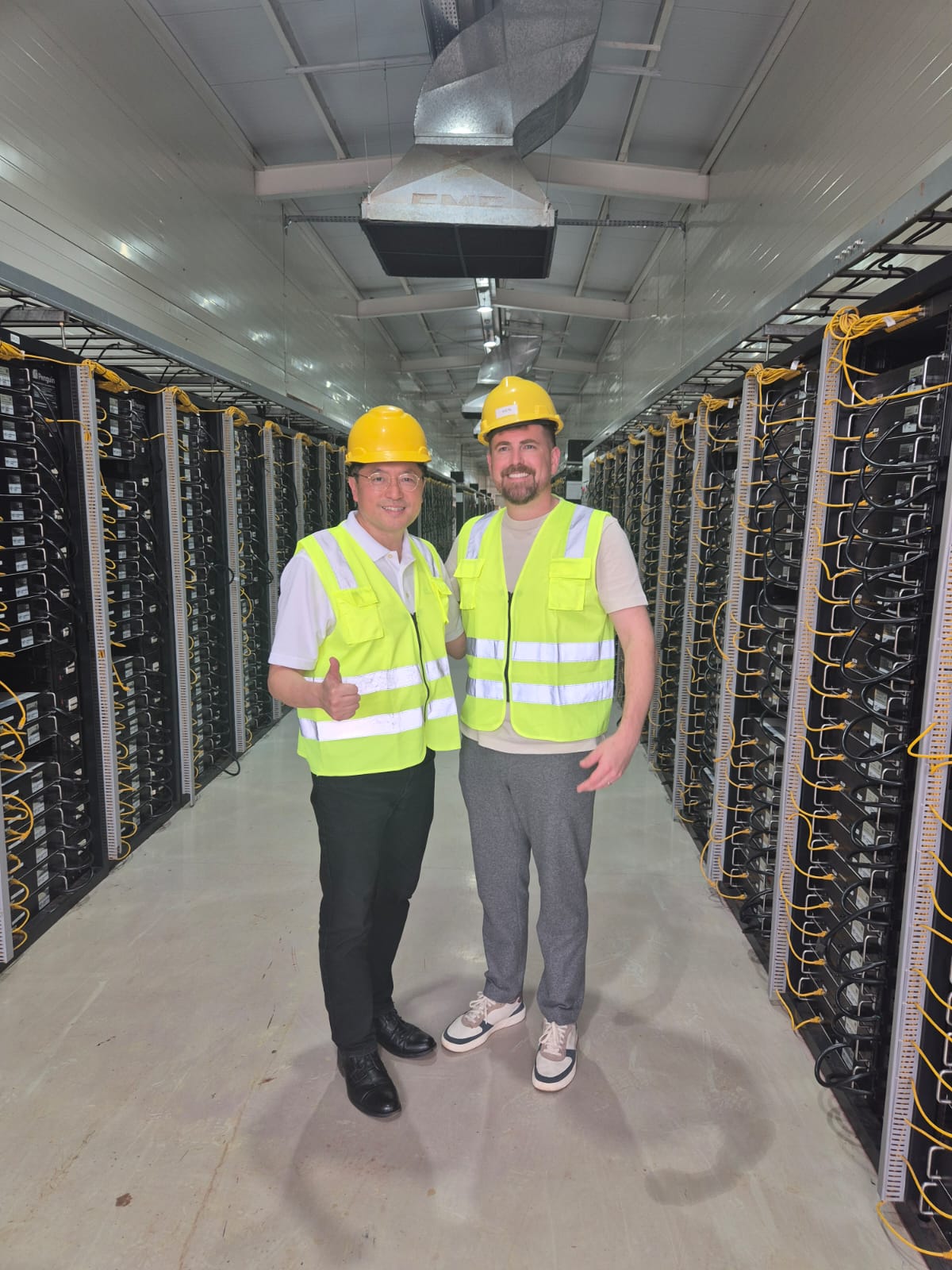 Groq's AI inference server system — the new strategic focus following the Nvidia deal. Photo: Groq
The $20 Billion "Not-an-Acquisition" Deal
Last December, Groq signed a unique agreement with Nvidia — described as a "not-an-acquisition agreement" — under which Nvidia paid $20 billion to license Groq's chip technology. This is a rare deal structure in the industry: instead of acquiring the company outright, Nvidia chose to pay for IP access and talent acquisition, while Groq retained operational independence.
Following the deal, several of Groq's senior executives moved to Nvidia. The current leadership team is headed by Adam Winter (Interim CEO) and Matt Eng (CFO). Groq's existing investors — including Disruptive and Infinitium — were described by Axios as having received substantial payouts from the deal, while also committing to back the new funding round.
Strategic Pivot: From Hardware to AI Inference Cloud
The new $650 million will be used by Groq to expand its inference cloud — a cloud computing service that enables enterprises and developers to run pre-trained AI models. Unlike training, which is capital-intensive and concentrated among a few tech giants, inference — the processing that occurs after a user submits a prompt — is experiencing booming demand as millions of AI applications are deployed every day.
Groq is renowned for its LPU (Language Processing Unit) chip architecture, delivering superior inference speeds compared to traditional GPUs — previously reaching 500 tokens per second on the Llama 2 model, 10 times faster than conventional solutions. With its own inference cloud infrastructure, Groq is betting that enterprises will choose the "fastest" solution over the "most popular" one when deploying AI at scale.
Fierce Competition in the AI Chip Market
Groq's move comes as the AI chip race heats up more than ever. Nvidia continues to dominate with its H100 and Blackwell GPU lines, but a wave of startups is emerging to challenge this position: Cerebras with wafer-scale chips, d-Matrix with dedicated inference chips, and Groq itself with LPUs. Nvidia spending $20 billion to license technology from a young startup shows that even the market leader cannot afford to underestimate new challengers.
Notably, Groq's $650 million round is virtually guaranteed — Disruptive and Infinitium have agreed to backstop any portion that other existing investors decline to take up under their pro-rata rights. This signals strong confidence from key backers, despite the company recently losing its senior leadership team to Nvidia.
Implications for Vietnamese Developers and Businesses
For Vietnamese developers and businesses deploying AI, the rise of specialized inference cloud solutions like Groq opens up a new alternative to relying solely on Nvidia GPUs. Inference costs — which often account for the largest share of AI operating budgets — could drop significantly as more providers compete. With inference speeds of 500 tokens per second, real-time applications such as chatbots, virtual assistants, and data analytics will deliver a much smoother user experience.
However, Groq's ecosystem remains nascent compared to Nvidia's CUDA — the platform supported by nearly all popular AI frameworks like PyTorch and TensorFlow. Vietnamese enterprises should monitor these developments closely without rushing to migrate: the AI chip market is currently undergoing a "reshaping" phase, and the ultimate winner may not yet have emerged.
Source: TechCrunch — After Nvidia’s $20B not-acqui-hire, AI chip startup Groq reportedly raising $650M