Should You Use Artificial Intelligence (AI) for Graphic Design?
Today, artificial intelligence (AI) has become an increasingly popular technology across many fields, including graphic design. Tools such as Midjourney and DALL-E provide more convenient solutions for businesses, users, and especially designers. However, this technology still has its limitations. So, should we use AI in graphic design?

1. Benefits of Using AI in Graphic Design
Using artificial intelligence in graphic design brings numerous benefits to the design industry. First, using AI helps accelerate production speed. AI technologies can generate graphic products automatically and rapidly, saving time for employees and boosting company productivity. Second, using AI improves product accuracy and consistency. AI technologies can detect and fix image errors quickly and automatically, helping minimize flaws in the final deliverables. Third, using AI reduces production costs. AI technologies help save on production expenses by automating certain tasks required to create a product, thereby reducing the number of staff needed and lowering overall costs. Finally, using AI diversifies product offerings. AI technologies help create richer and more varied graphic products, which helps attract customers and increase sales.2. Prominent AI Design Tools Today
MIDJOURNEY Released in 2021, Midjourney is an AI that generates artificial images and artworks from user-provided prompts. Using complex algorithms, the system analyzes the user's input to produce the most complete visual output. Therefore, the more specific, accurate, and detailed the input, the more vivid and faithful the resulting image will be to the user's vision.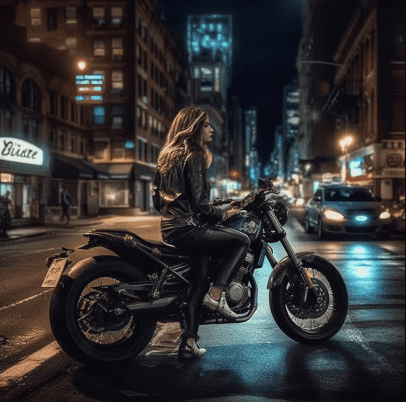 Users access Midjourney via Discord, select chat channels starting with "newbie", and enter the command "/Imagine [description]" in the message box to prompt the application to generate an image.
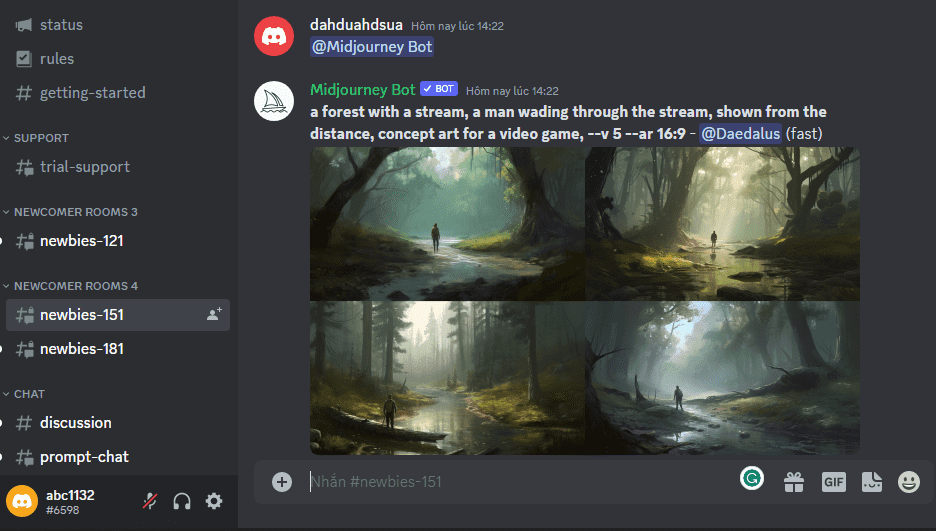 Although very smart and convenient, Midjourney cannot create a truly original work without synthesizing existing material. As a result, it can easily run into issues regarding copyright, authorship, and ownership.
DALL-E 2
DALL-E 2 is the next version of OpenAI's DALL-E artificial intelligence model. DALL-E was created to generate new images using text descriptions—meaning it can produce visuals based on a descriptive sentence.
DALL-E 2 continues to advance the model's capabilities, allowing it to generate images with higher resolution, greater detail, and more realism. It also improves the ability to render images with complex attributes, such as materials and lighting.
When accessing the DALL-E 2 interface, enter your prompt (a text description) into the search bar and click "Generate" to create an AI image.
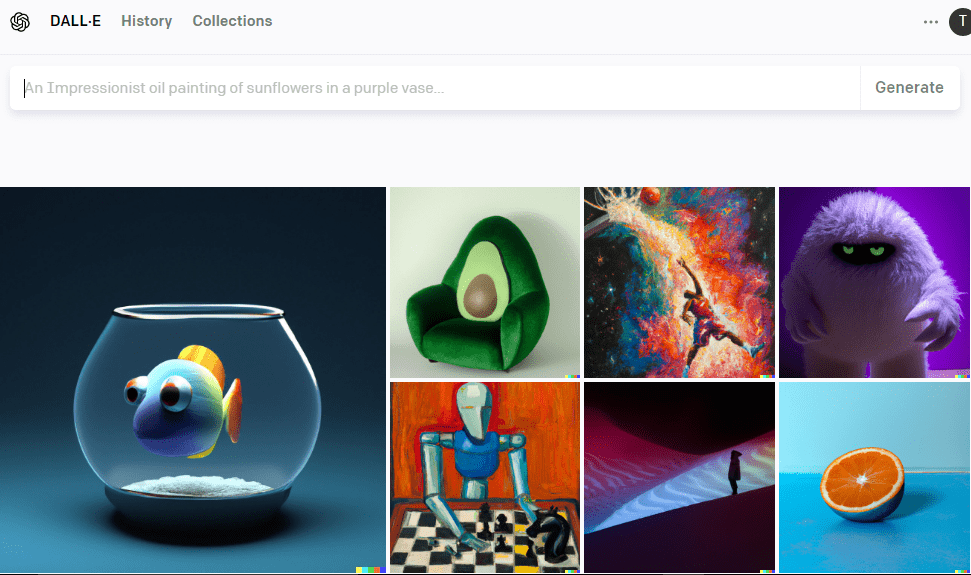 In particular, DALL-E 2 allows users to edit existing uploaded images to meet specific requirements. This opens up vast application potential for DALL-E 2 across design, education, entertainment, and many other fields.